← The stand
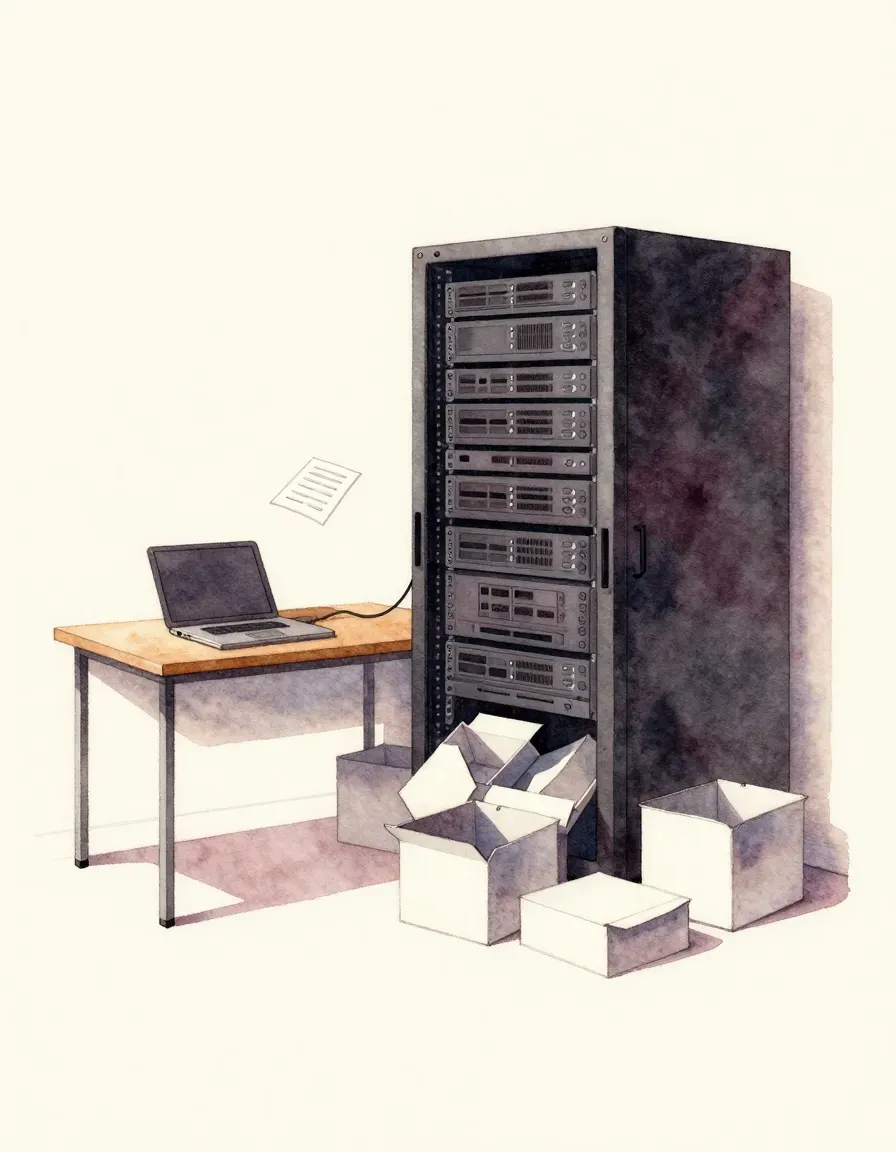
Cover of The Collection, Volume 1, Number 68: The Checkout. Thursday 5 November 2026, Melbourne. A watercolour of a thin laptop on a desk sending a small changeset toward a tall server rack that keeps the history, while unused repository clones sit discarded on the floor. Skip cover

Vol. 1  ·  No. 68  ·  Thursday 5 November 2026  ·  Melbourne


The Collection

The Checkout

Collected and edited by Newsletter World, for AK

Contents

Thursday’s letters were about the pipes under the agents. Anthropic’s engineers say Claude is no longer the bottleneck; downloading repositories and recording changes are. They rebuilt source control so the server keeps the history and the client stays thin. Elsewhere, developers number their cards against pricing and provider fights, open-model inference platforms publish token volumes that look exponential, and one letter argues agents should stop reading public pages with their eyes. Coding stopped being the bottleneck. The checkout did.

  1. iiiEditor’s LetterCoding stopped being the bottleneck. The checkout did.03
  2. ivThe Thin ClientThirty thousand merges a day, and Git still wanted a whole clone.04
  3. vThe Numbered DeckThe prank is pricing, terms, and a provider who can walk away.05
  4. viThe Open ShareFireworks alone is past forty trillion tokens a day on custom models.06
  5. viiThe Eyes OffPublic data does not need a mouse. It needs a thinner layer.07
  6. viiiStanding OrdersFour rules for this issue.08

03  ·  Editor’s Letter

Coding stopped being the bottleneck. The checkout did.

Yesterday the letters were about empty review chairs. Today they are about the infrastructure that empties next.

ByteByteGo walks through Scion, the source-control system Anthropic built when agent-written code outran Git. Merged changes leapt from roughly 2,500 a day in May to more than 30,000 by September. Continuous integration was doing about 25 million checkouts a day before anyone counted developer sandboxes. A full clone for every job is not clever. It is a traffic bill.

Beside that letter sit three others with the same shape. Kilo reminds LatAm developers that tokens are the new punched cards, and someone can still knock the stack. Nathan Lambert tries to measure open-model inference share and finds Fireworks already past 40 trillion tokens a day on customers’ customised models. Cobus Greyling times a flight-and-hotel browse at roughly two minutes with a computer-use agent, then gets the same public facts in seconds once the eyes come off the page.

The claim is not that agents write too much. It is that the old pipes were sized for people who cloned once and thought carefully. When the client stays thin and the history stays shared, the checkout stops being the joke.

The Collection · The Checkout03

04  ·  The Thin Client

Thirty thousand merges a day, and Git still wanted a whole clone

Anthropic’s Scion moves history, diffs, merges and commits onto the server. The working copy is what remains on disk.

Anthropic stores a large share of its code in a monorepo. That is only half the story. Merged changes grew from roughly 2,500 per day in May 2026 to more than 30,000 per day by September. The main branch’s history sits near 100 GB. Even a compressed working copy exceeds 25 GB. Continuous integration was doing about 25 million checkouts a day before developer environments, agent sandboxes and research jobs were counted. A naive transfer of that compressed copy on every CI checkout would push more than 600 PB of traffic a day.

Git’s local independence is expensive under that load. Most clients are already online jobs. Giving each one a fat slice of repository data means repeated transfer, storage and maintenance. Anthropic tried the usual mitigations: shallow clones, sparse checkouts, partial clones, internal mirrors, repository seeds. At peak they ran several hundred mirrors and still could not keep seeds fresh as the merge rate climbed.

The server answers. The client stays thin.

Scion reverses the allocation. The server answers historical queries, computes diffs, creates commits, and performs merges and rebases. The client, scn, keeps a limited cache, prepares files on disk, watches the filesystem, and talks to the service. There is no separate push step: a commit is a server operation. Changesets record only the files that changed relative to the first parent, with metadata in Spanner and compressed contents in object storage. Objects are content-addressed and immutable, so shared caches stop asking whether yesterday’s blob has gone stale. Jobs on a node talk to a local daemon; misses climb through a regional cache before they touch the authoritative servers. Strict cache boundaries keep a regional failure from stampeding the origin.

A team of seven built Scion and Antique, their code-review tool. The letter’s closing note is the one that travels: every developer on the system would rate Claude as better at writing code than they are. Their work was stopping Claude from taking a certain path, and holding the trade-offs the model cannot see. Coding was not the bottleneck. The checkout was.

The Collection · The Checkout04

05  ·  The Numbered Deck

The prank is pricing, terms, and a provider who can walk away

Kilo’s letter opens with punched cards on a Bogotá campus. The modern knock is a bill denominated in dollars you do not earn.

Eduardo numbered his cards. In 1970s Bogotá, industrial-engineering students fed ordered decks into IBM machines. The campus prank was to knock a stack to the floor. Sequence numbers in columns 73 to 80 let a sorter rebuild the deck. Freshmen often skipped that step.

Kilo’s point is that tokens are the new cards, and the knock no longer needs a prankster. Cursor’s Plus plan, as described in the letter, includes only Grok models, with third-party models billed separately on higher plans. OpenAI proposed 12 November as the end of the agreement under which it supplies models to Cursor. On 29 October a malicious extension posing as Claude Code sat in Cursor’s marketplace for about eleven hours. None of that breaks your code. It changes whether you can keep building the way you were.

Number your cards before someone else does.

For Latin American developers the bill arrives in dollars while the wage arrives in pesos or reais. The letter cites a Colombian dollar swing from 4,478 pesos in November 2024 to 3,048 in August 2026, a 32% move in under two years; a one-day Brazilian jump from 5.04 to 5.50 reais this past October; and a Mexican climb from 16.86 to 18.79 pesos between 4 September and 30 October 2026. In Stack Overflow’s 2026 Developer Survey, among 1,033 respondents who answered a cost question, 32.6% said they personally monitor usage and 25.3% said they choose cheaper models when they can. GitHub’s Innovation Graph counted roughly 20.4 million developer accounts across 21 Latin American economies in Q2 2026, more than China’s 11.8 million on that same slice. Talent is not the scarce part. Control of the stack is.

OpenRouter’s Chris Clark, quoted in the letter, puts open-weight models at about 64% of tokens and only 28% of spending. The advice is the old advice with new furniture: keep options open, route simple work to cheaper models, and do not treat one provider’s dropdown as a constitution.

The Collection · The Checkout05

06  ·  The Open Share

Fireworks alone is past forty trillion tokens a day on custom models

Nathan Lambert’s first open-model economy research note asks whether open inference is a market or a rounding error. The free numbers already answer part of it.

Lambert has been building the Interconnects Dashboard as a free aggregator of open-model adoption and performance data. He is frank about the fog: noisy platform metrics, marketing numbers from startups, imperfect public evaluations. The research notes are his current approximations, written more raw than the usual essays, and aimed mostly at paid readers. Policy researchers can ask for discounted access.

The question for this note is blunt. What is the market for open-model inference? Is it growing? Is it a rounding error next to OpenAI and Anthropic? His bellwethers are Baseten, Fireworks and Together AI, plus the open-model share of OpenRouter token volume. Hyperscalers almost certainly matter, he says, but Bedrock and Azure’s gardens do not break usage out by model category in public.

The startups’ fates track the category.

Public disclosures from those startups, plotted on a log scale in a talk slide he shares, show near-exponential growth even before the uptick he ties to GLM 5.2’s step change for open agents. Fireworks said at its first company conference this week that it is serving more than 40 trillion tokens per day to customers’ customised models. That slice alone, the letter notes, is a vertical that grew over 2× from the summer. Lambert expects Fireworks’ total number this autumn to sit well above 100 trillion tokens when the next update lands. He overlays Google’s reported platform and API token volumes from earnings as a closed-model reference. The full comparison lives behind the paywall; the free claim that travels is simpler. Open inference is no longer a curiosity. It is a pipe with its own checkout problem.

The Collection · The Checkout06

07  ·  The Eyes Off

Public data does not need a mouse. It needs a thinner layer

A flight-and-hotel browse takes minutes with computer use. The same facts arrive in seconds once the agent stops staring at a GUI.

Greyling splits the world the way operators already feel it. Private data sits behind logins and state changes: bank portals, HR tools, bookings that spend money. Public data is the same for everyone: flights, hotels, jobs, news, papers, maps. Computer-use agents can click through both. For public surfaces, that is the expensive joke.

His benchmark is a flight and a hotel. A browser agent that reads the pages the way a person would took roughly 90 to 120 seconds. Calling a structured search API cut the wait to 4.64 seconds. The raw JSON then dumped 81,728 tokens into context, most of it unused. A formatting layer that kept only the fields the task needed dropped the same search to 902 tokens, about a 99% cut, in 3.43 seconds. Once cached, the answer came back in about a microsecond. From roughly a hundred seconds to a microsecond is eight orders of magnitude on the clock, and two orders of magnitude off the prompt versus the raw JSON.

Route to the cheapest layer that can answer.

The architecture is triage, not purity. Keep computer use for private, logged-in, interactive work. Put public web surfaces through a structured layer. Sit a thin formatter on top so the model reads compact records with a source URL on every fact. The letter is explicit that both charts use a log scale, so the ninety-times token gap has to be said in prose. Read next to Scion, the rhyme is obvious. Agents do not need a full working copy of the public web any more than they need a full clone of the monorepo. Give them the changeset. Keep the eyes for the parts that still require a hand on the mouse.

The Collection · The Checkout07

08  ·  Standing Orders

Four rules for this issue

  1. I

    Do not clone what you only need to ask.

    If the job is online anyway, keep history on a shared service and ship a thin working copy.

  2. II

    Number the cards in your stack.

    Know which models, keys and dollar bills you depend on, and keep a second path ready when terms move.

  3. III

    Measure the open pipe, not the press release.

    Token volume from inference startups is noisy. It is still better than treating open models as a rounding error.

  4. IV

    Take the eyes off public data.

    Reserve computer use for private state. Fetch public facts structured, format them thin, and cache the answer.